1. H.G.Wells

2. The Time Machine

3.frame narrative
4.Pacifism

5.bonny
6. racke brains
7. D.H. Lawrence

8.Pornography
9. Eucharist

Herbert George "H. G." Wells (21
September 1866 – 13 August 1946) was an English writer. He was prolific in many
genres, including the novel, history, politics, social commentary, and
textbooks and rules for war games. Wells is now best remembered for his science
fiction novels and is called a "father of science fiction", along
with Jules Verne and Hugo Gernsback. His most notable science fiction
works include The Time Machine (1895), The Island of Doctor Moreau (1896), The
Invisible Man (1897), and The War of the Worlds (1898). He was nominated for
the Nobel Prize in Literature four times.
Wells's earliest specialised training was
in biology, and his thinking on ethical matters took place in a specifically
and fundamentally Darwinian context.[8] He was also from an early date an
outspoken socialist, often (but not always, as at the beginning of the First
World War) sympathising with pacifist views. His later works became
increasingly political and didactic, and he wrote little science fiction, while
he sometimes indicated on official documents that his profession was that of
journalist. Novels like Kipps and The History of Mr Polly, which describe
lower-middle-class life, led to the suggestion, when they were published, that
he was a worthy successor to Charles Dickens, but Wells described a range
of social strata and even attempted, in Tono-Bungay (1909), a diagnosis of
English society as a whole. A diabetic, in 1934, Wells co-founded the charity
The Diabetic Association (known today as Diabetes UK).
The Time Machine is a science fiction novel
by H. G. Wells, published in 1895 and written as a frame narrative. Wells is
generally credited with the popularization of the concept of time travel by
using a vehicle that allows an operator to travel purposely and selectively
forwards or backwards in time. The term "time machine", coined by
Wells, is now almost universally used to refer to such a vehicle.
The Time Machine has been adapted into
three feature films of the same name, as well as two television versions, and a
large number of comic book adaptations. It has also indirectly inspired many
more works of fiction in many media productions.
A frame story (also known as a frame tale
or frame narrative) is a literary technique that sometimes serves as a
companion piece to a story within a story, whereby an introductory or main
narrative is presented, at least in part, for the purpose of setting the stage
either for a more emphasized second narrative or for a set of shorter stories.
The frame story leads readers from a first story into another, smaller one (or
several ones) within it. The frame story may also be used to allow readers to
understand a part of the story, then jump to another part that can now be
understood. This is not however, to be mixed up with a narrative structure or
character personality change.
The earliest known frame stories are those
preserved on the ancient Egyptian Papyrus Westcar. Other early examples are
from 1st millennium BC India, when the Sanskrit epics Mahabharata, Ramayana,
Vishnu Sarma's Panchatantra, Syntipas's The Seven Wise Masters, and the fable
collections Hitopadesha and Vikram and The Vampire were written. This form
gradually spread west through the centuries and became popular, giving rise to
such classic frame tale collections as the One Thousand and One Nights (Arabian
Nights), The Decameron, and Canterbury Tales. This format had flexibility in
that various narrators could retain the stories they liked or understood, while
dropping ones they didn't and adding new ones they heard from other places.
This occurred particularly with One Thousand and One Nights, where different
versions over the centuries have included different stories.
The use of a frame story in which a single
narrative is set in the context of the telling of a story is also a technique
with a long history, dating back at least to the beginning section of the
Odyssey, in which the narrator Odysseus tells of his wandering in the court of
King Alcinous.
Pacifism is opposition to war, militarism,
or violence. The word pacifism was coined by the French peace campaigner Émile
Arnaud (1864–1921) and adopted by other peace activists at the tenth Universal
Peace Congress in Glasgow in 1901. A related term is ahimsa (to do no harm),
which is a core philosophy in Buddhism, Jainism, and Hinduism. While modern
connotations are recent, having been explicated since the 19th century, ancient
references abound.
In Christianity, Jesus Christ's injunction
to "love your enemies" and asking for forgiveness for his crucifiers
"for they know not what they do" have been interpreted as calling for
pacifism. In modern times, interest was revived by Leo Tolstoy in his late
works, particularly in The Kingdom of God Is Within You. Mohandas Gandhi
(1869–1948) propounded the practice of steadfast nonviolent opposition which he
called "satyagraha", instrumental in its role in the Indian
Independence Movement. Its effectiveness served as inspiration to Martin Luther
King Jr., James Lawson, James Bevel, Thich Nhat Hanh and many others in the
Civil Rights Movement. Pacifism was widely associated with the much publicized
image of Tiananmen Square Protests of 1989 with the "Tank Man", where
one protester stood in nonviolent opposition to a column of tanks.
1.
Chiefly Scot. pleasing to the eye;
handsome; pretty.
2.
British Dialect.
(of people) healthy, sweet, and lively.
(of places) placid; tranquil.
pleasing; agreeable; good.
(v)
3.
British Dialect. pleasingly; agreeably;
very well.
(n)
4.
Scot. and North England Archaic. a pretty
girl or young woman.
rack one's brain(s)
Fig. to try very hard to think of
something.
ex: I racked my brains all afternoon, but
couldn't remember where I put the book.
ex:Don't waste any more time racking your
brain. Go borrow the book from the library.
ex:I racked my brain for hours trying to
recall her name
David Herbert Richards "D. H."
Lawrence (11 September 1885 – 2 March 1930) was an English novelist, poet,
playwright, essayist, literary critic and painter. His collected works
represent, among other things, an extended reflection upon the dehumanising
effects of modernity and industrialisation. Some of the issues Lawrence
explores are sexuality, emotional health, vitality, spontaneity, and instinct.
Lawrence's opinions earned him many enemies
and he endured official persecution, censorship, and misrepresentation of his
creative work throughout the second half of his life, much of which he spent in
a voluntary exile he called his "savage pilgrimage".[4] At the time
of his death, his public reputation was that of a pornographer who had wasted
his considerable talents. E. M. Forster, in an obituary notice, challenged this
widely held view, describing him as "The greatest imaginative novelist of
our generation." Later, Cambridge critic F. R. Leavis championed both his
artistic integrity and his moral seriousness, placing much of Lawrence's
fiction within the canonical "great tradition" of the English novel.
Pornography is the portrayal of sexual subject
matter for the purpose of sexual arousal. Pornography may be presented in a
variety of media, including books, magazines, postcards, photographs,
sculpture, drawing, painting, animation, sound recording, writing, film, video,
and video games. The term applies to the depiction of the act rather than the
act itself, and so does not include live exhibitions like sex shows and
striptease. The primary subjects of present-day pornographic depictions are
pornographic models, who pose for still photographs, and pornographic actors or
porn stars, who perform in pornographic films. If dramatic skills are not
involved, a performer in a porn film may also be called a model.
Various groups within society have
considered depictions of a sexual nature immoral, addictive, and noxious,
labeling them pornographic, and attempting to have them suppressed under
obscenity and other laws, with varying degrees of success. Such works have also
often been subject to censorship and other legal restraints to publication,
display, or possession. Such grounds, and even the definition of pornography,
have differed in various historical, cultural, and national contexts.
Social attitudes towards the discussion and
presentation of sexuality have become more tolerant and legal definitions of
obscenity have become more limited, notably beginning in 1969 with Blue Movie
by Andy Warhol, the first adult erotic film depicting explicit sex to receive
wide theatrical release in the United States, and the subsequent Golden Age of
Porn, leading to an industry for the production and consumption of pornography
in the latter half of the 20th century. The introduction of home video and the
Internet saw a boom in the worldwide porn industry that generates billions of
dollars annually. Commercialized pornography accounts for over US$2.5 billion
in the United States alone, including the production of various media and
associated products and services. This industry employs thousands of performers
along with support and production staff. It is also followed by dedicated
industry publications and trade groups as well as the mainstream press, private
organizations (watchdog groups), government agencies, and political
organizations. More recently, sites such as Pornhub, RedTube, and YouPorn have
served as repositories for home-made or semi-professional pornography, made
available free by its creators (who could be called exhibitionists). It has
presented a significant challenge to the commercial pornographic film industry.
Irrespective of the legal or social view of
pornography, it has been used in a number of contexts. It is used, for example,
at fertility clinics to stimulate sperm donors. Some couples use pornography at
times for variety and to create a sexual interest or as part of foreplay. There
is also some evidence that pornography can be used to treat voyeurism.
The Eucharist /ˈjuːkərɪst/ (also called Holy
Communion, the Lord's Supper, among others) is a Christian rite that is
considered a sacrament in most churches and an ordinance in others. According
to the New Testament, the rite was instituted by Jesus Christ during his Last
Supper; giving his disciples bread and wine during the Passover meal, Jesus
commanded his followers to "do this in memory of me" while referring
to the bread as "my body" and the wine as "my blood".
Through the Eucharistic celebration Christians remember Christ's sacrifice of
himself on the cross.
The elements of the Eucharist, bread
(leavened or unleavened) and wine (or grape juice), are consecrated on an altar
(or table) and consumed thereafter. Communicants (that is, those who consume
the elements) may speak of "receiving the Eucharist", as well as
"celebrating the Eucharist". Catholics generally recognize a special
presence of Christ in this rite, though they differ about exactly how, where,
and when Christ is present. While all agree that there is no perceptible change
in the elements, Catholics believe that they actually become the body and blood
of Christ. Lutherans believe the true body and blood of Christ are really
present in, with, and under the bread and wine which remain physically
unchanged. The Reformed believe in a real but purely spiritual presence of
Christ in the Eucharist. Others, such as the Plymouth Brethren, take the act to
be only a symbolic reenactment of the Last Supper.
In spite of differences between Christians
about various aspects of the Eucharist, there is, according to the Encyclopædia
Britannica, "more of a consensus among Christians about the meaning of the
Eucharist than would appear from the confessional debates over the sacramental
presence, the effects of the Eucharist, and the proper auspices under which it
may be celebrated."
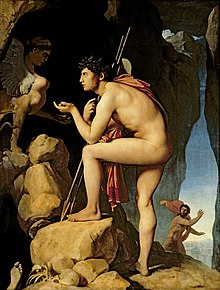
10. Oedipus complex
In psychoanalysis, the Oedipus complex (or,
less commonly, Oedipal complex) is a child's desire, that the mind keeps in the
unconscious via dynamic repression, to have sexual relations with the parent of
the opposite sex (i.e. males attracted to their mothers).
The Oedipus complex occurs in the
third—phallic stage (ages 3–6)—of the five psychosexual development stages: (i)
the oral, (ii) the anal, (iii) the phallic, (iv) the latent, and (v) the
genital—in which the source of libidinal pleasure is in a different erogenous
zone of the infant's body. The Oedipal complex originally refers to the sexual
desire of a son for his mother and does not need to be reciprocated.
Sigmund Freud, who coined the term
"Oedipus complex", believed that the Oedipus complex is a desire for
the parent in both males and females; he deprecated the term "Electra
complex", which was introduced by Carl Gustav Jung in regard to the
Oedipus complex manifested in young girls. Freud further proposed that boys and
girls experience the complex differently: boys in a form of castration anxiety,
girls in a form of penis envy; and that unsuccessful resolution of the complex
might lead to neurosis, pedophilia, and homosexuality. A child's identification
with the same-sex parent is the successful resolution of the complex.
Men and women who are fixated in the
Oedipal and Electra stages of their psychosexual development might be
considered "mother-fixated" and "father-fixated." In adult
life, this can lead to a choice of a sexual partner who resembles one's parent.

沒有留言:
張貼留言