1. decline to
(v.)
1. To express polite refusal:
ex: I wanted to invite them but I was
afraid they would decline.
2.
a. To slope downward; descend: The roof
declines at a steep angle.
b. To bend downward; droop: boughs
declining toward the ground.
3. To degrade or lower oneself; stoop:
refused to decline to their level of behavior.
4. To deteriorate gradually; fail: His
health has been declining for years.
5.
a. To sink, as the setting sun.
b. To draw to a gradual close:
ex:We made our way home as the day
declined.
(n.)
1. The process or result of declining,
especially:
a. A gradual deterioration, as in numbers,
activity, or quality: "overwhelming evidence that fish stocks ... are in
decline" (Jonathan Bocknek).
b. A downward movement or fall, as in
price.
c. A deterioration of health: the patient's
rapid decline.
2. A downward slope; a declivity: the sharp
decline of the dunes to the sea.
(n.)
1. a large machine at a fair that
turnsround and has wooden or plastic animals or vehicles on which children ride
2. a continuous moving strip on which
passengers' bags are put for collection in an airport
(v.)
1.
to drop or descend under the force of
gravity, as to a lower place through loss or lack of support.
2.
to come or drop down suddenly to a lower
position, especially to leave a standing or erect position suddenly, whether
voluntarily or not:
to fall on one's knees.
3.
to become less or lower; become of a lower
level, degree, amount, quality, value, number, etc.; decline:
The temperature fell ten degrees. Stock
prices fell to a new low for the year.
4.
to subside or abate.
5.
extend downward; hang down:
Her hair falls to her shoulders.
6.
to become lowered or directed downward, as
the eyes:
My eyes fell before his steady gaze.
7.
to become lower in pitch or volume:
Her voice fell, and she looked about in
confusion.
The fall

The Fall is a British-Irish crime drama television series filmed and set in Northern Ireland. The series is created and written by Allan Cubitt, produced by Artists Studio, and shown on RTÉ One in the Republic of Ireland and BBC Two in the UK. It stars Gillian Anderson as DSI Stella Gibson and Jamie Dornan as serial killer Paul Spector.
The series premiered in the Republic of Ireland on RTÉ One on 12 May 2013, and in the United Kingdom on BBC Two on 13 May 2013. The second series began in the Republic of Ireland on 9 November and in the UK on 13 November 2014. The third series premiered on RTÉ One on 25 September and on BBC Two on 29 September 2016.
The title is a reference to the line 'Falls the shadow' from the poem "The Hollow Men" by T. S. Eliot
prevent someone from doing something
1. to keep someone from doing
something.
ex: You can't prevent me from doing it! We
must try to prevent her from going back there.
behaviour in which you refuse to obey
someone or something:
ex: The demonstration is a pointless
act/gesture of defiance against the government.
ex: In defiance of the ceasefire, rebel
troops are again firing on the capital.
6.For against

For Against is a United States post-punk/dream
pop band from Lincoln, Nebraska. Despite numerous lineup shuffles and some
periods of dormancy, the band has produced material steadily from its 1984
inception to the present.
Something of an anomaly in Midwestern
America, For Against—especially early in its career—has looked to a distinctly
British aesthetic for inspiration, most obviously the post-punk scene
exemplified by the early rosters of the Factory and 4AD record labels.
Featuring members of underground Lincoln
bands Cartoon Pupils and Hymn to Joy, the band first called itself Glue, and
then D.B.L., finally settling on Four Against One,[1] a name that reflected its
status as a quintet at the time. Bassist Liz Panarelli's early departure gave
way to keyboardist Jeffrey Runnings' shift to bass, as well as the band's
truncation of its name to For Against. By 1985, singer Jon Fynbu had departed
as well, leaving the core trio of guitarist Harry Dingman III, drummer Gregory
Hill and bassist Jeffrey Runnings. The latter would become (with very few
exceptions) the band's sole vocalist and lyricist.[2]
In 1985, For Against debuted on vinyl with
the "Autocrat"/"It's a Lie" single, released in a limited
run on the band's own Republic Issue label. This single has become highly
collectible among the group's fanbase. Additional early material was later
released as the In the Marshes 10" EP (recorded 1985, released 1990) and
Black Soap EP (recorded 1984, released 2011).
In 1987, the band signed to Independent
Project Records, issuing its first full-length album, Echelons. That year the
band undertook its only full tour to date, promoting Echelons at clubs across
the U.S. including CBGB, Maxwell's and Chicago's Cabaret Metro. Echelons
received a Grammy nomination for its jacket design by IPR head Bruce Licher;
each LP in the initial pressing of 1000 came with an actual shaft of wheat
integrated into the cover illustration. Promotional videos were made for two of
the album's songs, "Autocrat" and the title track; both were included
as bonus material in the reissue of their second album, December.[3]
Having received favorable press for the
melodic post-punk of Echelons, For Against released follow-up December the next
year, to equally rave reception. The band lost considerable momentum, however,
when Hill left, followed shortly thereafter by Dingman after a brief attempt at
a retooled, four-piece lineup. Hill and Dingman would soon form the Millions, a
melodic alt-rock outfit with more mainstream leanings than For Against.
7.alienation
Alienation may refer to:
1. Alienation (property law), the legal
transfer of title of ownership to another party
2. Alienation effect, an audience's
inability to identify with a character in a performance, as an intended
consequence of the actor's interpretation of the script
3. Marx's theory of alienation, the
separation of things that naturally belong together, or antagonism between
those who are properly in harmony
4. Parental alienation, psychological
alienation of a child from a parent, especially after divorce, such that the child
acts with hostility toward the parent
5. Parental alienation syndrome, a pattern
of parental alienation described by American psychiatrist Richard Gardner in
the early 1980s
6. Social alienation, an individual's
estrangement from his community, society, or world
7. Alienation (video game), a 2016
PlayStation 4 video game
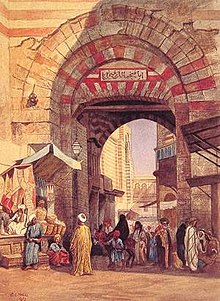
A bazaar is a permanently enclosed
marketplace or street where goods and services are exchanged or sold. The term
originates from the Persian word bāzār, from Middle Persian wāzār, from Old
Persian vāčar, from Proto-Indo-Iranian
*wahā-čarana.Souq is another word used in the
Middle East for an open-air marketplace or commercial quarter. The term bazaar
is sometimes also used to refer to the "network of merchants, bankers, and
craftsmen" who work in that area. Although the current meaning of the word
is believed to have originated in native Zoroastrian Persia, its use has spread
and now has been accepted into the vernacular in countries around the world.
The rise of large bazaars and stock trading centers in the Muslim World allowed
the creation of new capitals and eventually new empires. New and wealthy cities
such as Isfahan, Golconda, Samarkand, Cairo, Baghdad, and Timbuktu were founded
along trade routes and bazaars. Street markets is the European and North
American equivalents.

In Greek mythology, Charon or Kharon (/ˈkɛərɒn/ or /ˈkɛərən/; Greek Χάρων) is the ferryman of Hades who carries souls of the newly
deceased across the rivers Styx and Acheron that divided the world of the
living from the world of the dead. A coin to pay Charon for passage, usually an
obolus or danake, was sometimes placed in or on the mouth of a dead person.
Some authors say that those who could not pay the fee, or those whose bodies
were left unburied, had to wander the shores for one hundred years. In the
catabasis mytheme, heroes – such as Aeneas, Dionysus, Heracles, Hermes,
Odysseus, Orpheus, Pirithous, Psyche, Theseus and Sisyphus – journey to the
underworld and return, still alive, conveyed by the boat of Charon.
river styx
In Greek mythology, Styx (/stɪks/; Ancient
Greek: Στύξ [stýkʰs])[citation needed] is a
deity and a river that forms the boundary between Earth and the Underworld (the
domain often called Hades, which also is the name of its ruler). The rivers
Styx, Phlegethon, Acheron, Lethe, and Cocytus all converge at the center of the
underworld on a great marsh, which sometimes is also called the Styx. According
to Herodotus, the river Styx originates near Feneos. Styx is also a goddess
with prehistoric roots in Greek mythology as a daughter of Tethys, after whom
the river is named and because of whom it had miraculous powers.
10. Pyre

A pyre (Ancient Greek: πυρά; pyrá, from πῦρ, pyr, "fire"), also known as a funeral pyre, is a
structure, usually made of wood, for burning a body as part of a funeral rite
or execution. As a form of cremation, a body is placed upon or under the pyre,
which is then set on fire.
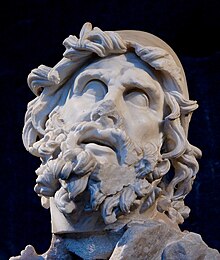
Odysseus (/oʊˈdɪsiəs, oʊˈdɪsjuːs/;
Greek: Ὀδυσσεύς [odysˈsews]), also known by the
Latin name Ulysses (US /juːˈlɪsiːz/, UK /ˈjuːlɪsiːz/; Latin: Ulyssēs, Ulixēs), was a legendary Greek king of Ithaca and the hero of Homer's
epic poem the Odyssey. Odysseus also plays a key role in Homer's Iliad and
other works in that same epic cycle.
Husband of Penelope, father of Telemachus,
and son of Laërtes and Anticlea, Odysseus is renowned for his brilliance,
guile, and versatility (polytropos), and is hence known by the epithet Odysseus
the Cunning (mētis, or "cunning intelligence"). He is most famous for
the Odyssey, ten eventful years he took to return home after the decade-long
Trojan War.
The name has several variants: in Greek the
character was called Olysseus (Ὀλυσσεύς), Oulixeus (Οὐλιξεύς), Oulixes (Οὐλίξης),and he was known as Ulyssēs in Latin or Ulixēs in Roman
mythology. Hence, "there may originally have been two separate figures,
one called something like Odysseus, the other something like Ulixes, who were
combined into one complex personality."
The etymology of the name is unknown.
Ancient authors linked the name to the Greek verbs odussomai (Greek: ὀδύσσομαι) 'to
be wroth against, to hate', or to oduromai (ὀδύρομαι) 'to
lament, bewail'.[4][5] Homer in references and puns, relates it to various
forms of this verb. It has also been suggested that the name is of non-Greek
origin, probably not even Indo-European, with an unknown etymology; R. S. P.
Beekes has suggested a Pre-Greek origin.
In Book 19 of the Odyssey, where Odysseus's
early childhood is recounted, Euryclea asks Autolycus to name him. Euryclea
tries to guide him to naming the boy Polyaretos, "for he has much been
prayed for" (19.403f).[8] Autolycus "apparently in a sardonic mood
... decided to give the child a name that would commemorate his own experience
in life. 'Because I got odium upon myself before coming here ... from many ...
let the child's name be Odysseus to signify this.' The pun was prophetic as
well as commemorative." Odysseus often receives the patronymic epithet
Laertiades (Λαερτιάδης), "son of Laërtes".
In the Iliad and Odyssey there are several
epithets used to describe Odysseus.
His name and stories were adopted into
Etruscan religion under the name Uthuze.
Penelope
In Homer's Odyssey, Penelope (/pəˈnɛləpiː/
pə-nel-ə-pee; Greek: Πηνελόπεια, Pēnelópeia, or Πηνελόπη, Pēnelópē) is the wife of Odysseus, who is known for her fidelity to
Odysseus while he was absent, despite having many suitors.
Her name has traditionally been associated
with marital fidelity, and so it was with the Greeks and Romans, but some
recent feminist readings offer a more ambiguous interpretation. Her character
is beyond what was available to most women at the time, and she is considered a
match for Odysseus due to her immense strength, warmth and intelligence.

James Augustine Aloysius Joyce (2 February
1882 – 13 January 1941) was an Irish novelist, short story writer, and poet. He
contributed to the modernist avant-garde and is regarded as one of the most
influential and important authors of the 20th century.
Joyce is best known for Ulysses (1922), a
landmark work in which the episodes of Homer's Odyssey are paralleled in an
array of contrasting literary styles, perhaps most prominent among these the
stream of consciousness technique he utilised. Other well-known works are the short-story
collection Dubliners (1914), and the novels A Portrait of the Artist as a Young
Man (1916) and Finnegans Wake (1939). His other writings include three books of
poetry, a play, occasional journalism and his published letters.
Joyce was born in 41 Brighton Square,
Rathgar, Dublin—about half a mile from his mother's birthplace in Terenure—into
a middle-class family on the way down. A brilliant student, he briefly attended
the Christian Brothers-run O'Connell School before excelling at the Jesuit schools
Clongowes and Belvedere, despite the chaotic family life imposed by his
father's alcoholism and unpredictable finances. He went on to attend University
College Dublin.
In 1904, in his early twenties, Joyce
emigrated permanently to continental Europe with his partner (and later wife)
Nora Barnacle. They lived in Trieste, Paris and Zurich. Though most of his
adult life was spent abroad, Joyce's fictional universe centres on Dublin, and
is populated largely by characters who closely resemble family members, enemies
and friends from his time there. Ulysses in particular is set with precision in
the streets and alleyways of the city. Shortly after the publication of
Ulysses, he elucidated this preoccupation somewhat, saying, "For myself, I
always write about Dublin, because if I can get to the heart of Dublin I can
get to the heart of all the cities of the world. In the particular is contained
the universal."

沒有留言:
張貼留言