青少年文學 Week 18
期末考週!!
2017年6月11日 星期日

Week 17
青少年文學 Week 17
1.redeem
refund
2. regulate
3. parallel
4. diabetes
(n)
diameter
hydrometer
5. cana wedding louver

6. cain and abel

7. Francis of Assisi

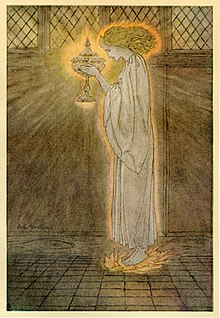
8. Holy Grail
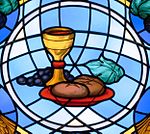
9. Eucharist
10. allegorical

1.redeem
(v)
1. to buy or pay off; clear by payment:
to redeem a mortgage.
2. to buy back, as after a tax sale or a
mortgage foreclosure.
3. to recover (something pledged or
mortgaged) by payment or other satisfaction:
to redeem a pawned watch.
4.to exchange (bonds, trading stamps, etc.)
for money or goods.
5.to convert (paper money) into specie.
6.to discharge or fulfill (a pledge,
promise, etc.).
7.to make up for; make amends for; offset
(some fault, shortcoming, etc.):
ex: His bravery redeemed his youthful
idleness.
refund
(v)
1. to give back or restore (especially
money); repay.
2. to make repayment to; reimburse.
3. to make repayment.
(n)
1. an act or instance of refunding.
2. an amount refunded.
(v)
1. to control or direct by a rule,
principle, method, etc.:
to regulate household expenses.
2. to adjust to some standard or
requirement, as amount, degree, etc.:
to regulate the temperature.
3. to adjust so as to ensure accuracy of
operation:
to regulate a watch.
4. to put in good order
ex: Instead, he muses, why not regulate as
if all people need guns, everywhere?
3. parallel
(adj)
1.
extending in the same
direction, equidistant at all points, and never converging or diverging:
ex: parallel rows of trees.
2.
having the same direction,
course, nature, or tendency; corresponding; similar; analogous:
ex: Canada and the U.S. have many parallel economic interests.
3.
Geometry.
(of straight lines) lying in the same plane but never meeting no
matter how far extended.
(of planes) having common perpendiculars.
(of a single line, plane, etc.) equidistant from another or
others (usually followed by to or with).
4.
Electricity. consisting of or
having component parts connected in parallel:
a parallel circuit.
5.
Music.
a.
(of two voice parts)
progressing so that the interval between them remains the same.
b.
(of a tonality or key) having
the same tonic but differing in mode.
6.
Computers.
a.
of or relating to the
apparent or actual performance of more than one operation at a time, by the
same or different devices (distinguished from serial ):
ex: Some computer systems join more than one CPU forparallel
processing.
b.
of or relating to the
simultaneous transmission or processing of all the parts of a whole, as all the
bits of a byte or all the bytes of a computer word (distinguished from serial
).
(n.)
1. a parallel line or plane.
2. anything parallel or comparable in
direction, course, nature, or tendency to something else.
3. Also called parallel of latitude.
Geography.
a. an imaginary circle on the earth's surface formed by the
intersection of a plane parallel to the plane of the equator, bearing east and
west and designated in degrees of latitude north or south of the equator along
the arc of any meridian.
b. the line representing this circle on a chart or map.
4. something identical or similar in essential
respects; match; counterpart:
a case history without a known parallel.
5. correspondence or analogy:
ex: These two cases have some parallel with
each other.
6.a comparison of things as if regarded
side by side.
7.Electricity. an arrangement of the
components, as resistances, of a circuit in such a way that all positive
terminals are connected to one point and all negative terminals are connected
to a second point, the same voltage being applied to each component.
4. diabetes
(n)
1. any of several disorders characterized
by increased urine production.
2. Also called diabetes mellitus [mel-i-tuh s, muh-lahy-] (Show IPA). a
disorder of carbohydrate metabolism, usually occurring in genetically
predisposed individuals, characterized by inadequate production or utilization
of insulin and resulting in excessive amounts of glucose in the blood and
urine, excessive thirst, weight loss, and in some cases progressive destruction
of small blood vessels leading to such complications as infections and gangrene
of the limbs or blindness.
3. Also called type 1 diabetes,
insulin-dependent diabetes, juvenile diabetes. a severe form of diabetes
mellitus in which insulin production by the beta cells of the pancreas is
impaired, usually resulting in dependence on externally administered insulin,
the onset of the disease typically occurring before the age of 25.
4. Also called type 2 diabetes,
non-insulin-dependent diabetes, adult-onset diabetes, maturity-onset diabetes.
a mild, sometimes asymptomatic form of diabetes mellitus characterized by
diminished tissue sensitivity to insulin and sometimes by impaired beta cell
function, exacerbated by obesity and often treatable by diet and exercise.
5. Also called diabetes insipidus [in-sip-i-duh s] (Show IPA). increased urine
production caused by inadequate secretion of vasopressin by the pituary gland.
(n.)
1. Geometry.
a. a
straight line passing through the center of a circle or sphere and meeting the
circumference or surface at each end.
b. a
straight line passing from side to side of any figure or body, through its
center.
2. the length of such a line.
3. the width of a circular or cylindrical
object.
thermometer
(n)
an instrument for measuring temperature,
often a sealed glass tube that contains a column of liquid, as mercury, that
expands and contracts, or rises and falls, with temperature changes, the
temperature being read where the top of the column coincides with a calibrated
scale marked on the tube or its frame.
hydrometer
(n)
an instrument for determining the specific
gravity of a liquid, commonly consisting of a graduated tube weighted to float
upright in the liquid whose specific gravity is being measured.
5. cana wedding louver
The Wedding at Cana (1563, also The Wedding
Feast at Cana), by Paolo Veronese, is a representational painting that depicts
the Bible story of the Marriage at Cana, a wedding banquet at which Jesus
converts water to wine (John 2:1–11). The work is a large-format (6.77 m × 9.94
m) oil painting executed in the Mannerist style of the High Renaissance
(1490–1527); as such, The Wedding Feast at Cana is the most expansive canvas
(67.29 m2) in the paintings collection of the Musée du Louvre.
As a Mannerist painting, The Wedding at
Cana comprehends the stylistic influences of the ideals of compositional
harmony of artists such as Leonardo, Raphael, and Michelangelo, especially his
early paintings. Whereas the art of the High Renaissance emphasized ideal
proportion, balance, and beauty, Mannerism exaggerated those ideals of figure,
light, and colour, with asymmetric and unnaturally elegant compositions.
In executing the painting in the Mannerist
style of compositional tension and instability, Veronese used technical
artifice, social intellect, and cultural sophistication for The Wedding at Cana
to tell a Biblical story to the viewer.
6. cain and abel
Cain and Abel (Hebrew: הֶבֶל ,קַיִן Qayin, Heḇel; Arabic: قابيل، هابيل Qābīl, Hābīl) were sons of Adam and Eve.[1] Cain, the firstborn,
tilled the soil, and his brother Abel was a shepherd. The brothers made
sacrifices to God, each of his own produce, but God favored Abel's sacrifice
instead of that of Cain. Cain murdered Abel. God punished Cain to a life of
wandering, but set a mark on him so that no man would kill him. Cain then dwelt
in the land of Nod (נוד, "wandering"), where he built a city and fathered the
line of descendants beginning with Enoch. The narrative never explicitly states
Cain's motive (though it does describe him as being wrathful, and his motive is
traditionally assumed to be envy), nor God's reason for rejecting Cain's
sacrifice, nor details on the identity of Cain's wife. Some traditional
interpretations consider Cain to be the originator of evil, violence, or greed.
7. Francis of Assisi
Saint Francis of Assisi (Italian: San
Francesco d'Assisi), born Giovanni di Pietro di Bernardone, informally named as
Francesco (1181/1182 – 3 October 1226), was an Italian Roman Catholic friar,
deacon and preacher. He founded the men's Order of Friars Minor, the women’s
Order of Saint Clare, the Third Order of Saint Francis and the Custody of the
Holy Land. Francis is one of the most venerated religious figures in history.
Pope Gregory IX canonized Francis on 16
July 1228. Along with Saint Catherine of Siena, he was designated Patron saint
of Italy. He later became associated with patronage of animals and the natural
environment, and it became customary for Catholic and Anglican churches to hold
ceremonies blessing animals on his feast day of 4 October.
In 1219, he went to Egypt in an attempt to
convert the Sultan to put an end to the conflict of the Crusades. By this
point, the Franciscan Order had grown to such an extent that its primitive
organizational structure was no longer sufficient. He returned to Italy to
organize the Order. Once his community was authorized by the Pope, he withdrew
increasingly from external affairs. Francis is also known for his love of the
Eucharist. In 1223, Francis arranged for the first Christmas live nativity
scene. According to Christian tradition, in 1224 he received the stigmata
during the apparition of Seraphic angels in a religious ecstasy making him the
first recorded person in Christian history to bear the wounds of Christ's Passion.
He died during the evening hours of 3 October 1226, while listening to a
reading he had requested of Psalm 142 (141).
8. Holy Grail
The Holy Grail is a vessel that serves as
an important motif in Arthurian literature. Different traditions describe it as
a cup, dish or stone with miraculous powers that provide happiness, eternal
youth or sustenance in infinite abundance.
A "grail", wondrous but not
explicitly holy, first appears in Perceval, le Conte du Graal, an unfinished
romance written by Chrétien de Troyes around 1190.[1] Here, it is a
processional salver used to serve at a feast. Chrétien's story attracted many
continuators, translators and interpreters in the later 12th and early 13th
centuries, including Wolfram von Eschenbach, who perceived the grail as a great
precious stone that fell from the sky. In the late 12th century, Robert de
Boron wrote in Joseph d'Arimathie that the Grail was Jesus's vessel from the
Last Supper, which Joseph of Arimathea used to catch Christ's blood at the
Crucifixion. Thereafter, the Holy Grail became interwoven with the legend of
the Holy Chalice, the Last Supper cup, a theme continued in works such as the
Vulgate Cycle, the Post-Vulgate Cycle, and Thomas Malory's Le Morte d'Arthur
Scholars have long speculated on the
origins of the Holy Grail before Chrétien, suggesting that it may contain
elements of the trope of magical cauldrons from Celtic mythology combined with
Christian legend surrounding the Eucharist.
The Eucharist /ˈjuːkərɪst/ (also called Holy
Communion, the Lord's Supper, among other names) is a Christian rite that is
considered a sacrament in most churches and an ordinance in others. According
to the New Testament, the rite was instituted by Jesus Christ during his Last
Supper; giving his disciples bread and wine during the Passover meal, Jesus
commanded his followers to "do this in memory of me" while referring
to the bread as "my body" and the wine as "my blood".
Through the Eucharistic celebration Christians remember Christ's sacrifice of
himself on the cross.
The elements of the Eucharist, bread
(leavened or unleavened) and wine (or grape juice), are consecrated on an altar
(or table) and consumed thereafter. Communicants (that is, those who consume
the elements) may speak of "receiving the Eucharist", as well as
"celebrating the Eucharist". Christians generally recognize a special
presence of Christ in this rite, though they differ about exactly how, where,
and when Christ is present.[4] While all agree that there is no perceptible
change in the elements, Catholics believe that they actually become the body
and blood of Christ (transubstantiation). Lutherans believe the true body and
blood of Christ are really present "in, with, and under" the forms of
the bread and wine (sacramental union). Reformed Christians believe in a real
but purely spiritual presence of Christ in the Eucharist. Others, such as the
Plymouth Brethren, take the act to be only a symbolic reenactment of the Last
Supper.
In spite of differences between Christians
about various aspects of the Eucharist, there is, according to the Encyclopædia
Britannica, "more of a consensus among Christians about the meaning of the
Eucharist than would appear from the confessional debates over the sacramental
presence, the effects of the Eucharist, and the proper auspices under which it
may be celebrated."
10. allegorical
As a literary device, an allegory is a
metaphor whose vehicle may be a character, place or event, representing
real-world issues and occurrences. Allegory has been used widely throughout
history in all forms of art, largely because it can readily illustrate complex
ideas and concepts in ways that are comprehensible or striking to its viewers,
readers, or listeners.
Writers or speakers typically use
allegories as literary devices or as rhetorical devices that convey hidden
meanings through symbolic figures, actions, imagery, or events, which together
create the moral, spiritual, or political meaning the author wishes to convey.
2017年6月5日 星期一
Week14
青少年文學 Week 14
1. Fantasy

2.Ursula K. Le Guin

3.Parable
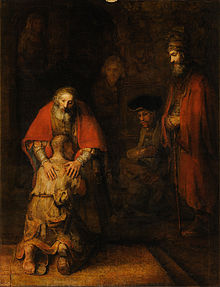
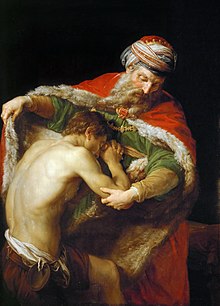
4.The Prodigal Son
5.Elysium

6.The snowpiercer
7.Big Bother

8.Animal Farm
9. Allegory
10.clone
1. Fantasy
Fantasy is a fiction genre set in an
imaginary universe, often but not always without any locations, events, or
people from the real world. Its roots are in oral traditions, which then
developed into literature and drama. From the twentieth century it has expanded
further into various media, including, film, television, graphic novels, and
video games.
Most fantasy uses magic or other
supernatural elements as a main plot element, theme, or setting. Magic and
magical creatures are common in many of these imaginary worlds. Fantasy is a
subgenre of speculative fiction and is distinguished from the genres of science
fiction and horror by the absence of scientific or macabre themes respectively,
though these genres overlap.
In popular culture, the fantasy genre is
predominantly of the medievalist form. In its broadest sense, however, fantasy
comprises works by many writers, artists, filmmakers, and musicians from
ancient myths and legends to many recent and popular works.
Fantasy is studied in a number of
disciplines including English and other language studies, cultural studies,
comparative literature, history and medieval studies. Work in this area ranges
widely from the structuralist theory of Tzvetan Todorov, which emphasizes the
fantastic as a liminal space, to work on the connections (political, historical
and literary) between medievalism and popular culture.
Traits of fantasy
The identifying trait of fantasy is the
author's reliance on imagination to create narrative elements that do not have
to rely on history or nature to be coherent.[2] This differs from realistic
fiction in that whereas realistic fiction has to attend to the history and
natural laws of reality, fantasy does not. An author applies his or her
imagination to come up with characters, plots, and settings that are impossible
in reality. Many fantasy authors use real-world folklore and mythology as
inspiration;[3] and although for many the defining characteristic of the
fantasy genre is the inclusion of supernatural elements, such as magic,[4] this
does not have to be the case. For instance, a narrative that takes place in an
imagined town in the northeastern United States could be considered realistic
fiction as long as the plot and characters are consistent with the history of
region and the natural characteristics that someone who has been to the
northeastern United States expects; when, however, the narrative takes place in
an imagined town, on an imagined continent, with an imagined history and an
imagined ecosystem, the work becomes fantasy with or without supernatural
elements.
Fantasy has often been compared with
science fiction and horror because they are the major categories of speculative
fiction. Fantasy is distinguished from science fiction by the plausibility of
the narrative elements. A science fiction narrative is unlikely, though seeming
possible through logical scientific or technological extrapolation, whereas
fantasy narratives do not need to be scientifically possible.[5] The imagined
elements of fantasy do not need a scientific explanation to be narratively
functional. Authors have to rely on the readers' suspension of disbelief, an
acceptance of the unbelievable or impossible for the sake of enjoyment, in
order to write effective fantasies. Despite both genres' heavy reliance on the
supernatural, fantasy and horror are distinguishable. Horror primarily evokes
fear through the protagonists' weaknesses or inability to deal with the
antagonists.
2.Ursula K. Le Guin
Ursula Kroeber Le Guin is an American
author of novels, children's books, and short stories, mainly in the genres of
fantasy and science fiction. She has also written poetry and essays. First
published in the 1960s, her work has often depicted futuristic or imaginary
alternative worlds in politics, the natural environment, gender, religion,
sexuality and ethnography. In 2016, The New York Times described her as
"America's greatest living science fiction writer", although she
herself has said she would prefer to be known as an "American
novelist".
She influenced such Booker Prize winners
and other writers as Salman Rushdie and David Mitchell – and notable science
fiction and fantasy writers including Neil Gaiman and Iain Banks.[4] She has
won the Hugo Award, Nebula Award, Locus Award, and World Fantasy Award, each more
than once.[4][5] In 2014, she was awarded the National Book Foundation Medal
for Distinguished Contribution to American Letters.[6] In 2003 she was made a
Grandmaster of Science Fiction, one of only a handful of women writers to take
the top honour in a genre that has come to be dominated by male writers. Le
Guin has resided in Portland, Oregon, since 1959.
3.Parable
A parable is a succinct, didactic story, in
prose or verse, which illustrates one or more instructive lessons or
principles. It differs from a fable in that fables employ animals, plants,
inanimate objects, or forces of nature as characters, whereas parables have
human characters. A parable is a type of analogy.
Some scholars of the canonical gospels and
the New Testament apply the term "parable" only to the parables of
Jesus, though that is not a common restriction of the term. Parables such as
"The Prodigal Son" are central to Jesus' teaching method in the
canonical narratives and the apocrypha.
History
Parables are often used to explore ethical
concepts in spiritual texts. The Bible contains numerous parables in the
Gospels section of the New Testament (Jesus' parables). These are believed by
some scholars (such as John P. Meier) to have been inspired by mashalim, a form
of Hebrew comparison. Examples of Jesus' parables include the Good Samaritan
and the Prodigal Son. Mashalim from the Old Testament include the parable of
the ewe-lamb (told by Nathan in 2 Samuel 12:1-9) and the parable of the woman
of Tekoah
Parables also appear in Islam. In Sufi
tradition, parables are used for imparting lessons and values. Recent authors
such as Idries Shah and Anthony de Mello have helped popularize these stories
beyond Sufi circles.
Modern parables also exist. A
mid-19th-century example, the Parable of the broken window, criticises a part
of economic thinking.
4.The Prodigal Son
The Parable of the Prodigal Son (also known
as the Two Brothers, Lost Son, Loving Father, or Lovesick Father) is one of the
parables of Jesus and appears in Luke 15:11–32. Jesus Christ shares it with his
disciples, the Pharisees and others.
In the story, a father has two sons. The
younger son asks for his inheritance and after wasting his fortune (the word
"prodigal" means "wastefully extravagant"), becomes
destitute. He returns home with the intention of begging his father to be made
one of his hired servants, expecting his relationship with his father is likely
severed. The father welcomes him back and celebrates his return. The older son
refuses to participate. The father reminds the older son that one day he will
inherit everything. But, they should still celebrate the return of the younger
son because he was lost and is now found.
It is the third and final part of a cycle
on redemption, following the Parable of the Lost Sheep and the Parable of the
Lost Coin. In Revised Common Lectionary and Latin Rite Catholic Lectionary,
this parable is read on the fourth Sunday of Lent (in Year C),;[3] in the
latter it is also included in the long form of the Gospel on the 24th Sunday of
Ordinary Time in Year C, along with the preceding two parables of the cycle. In
the Eastern Orthodox Church it is read on the Sunday of the Prodigal Son.
Elysium or the Elysian Fields (Ancient
Greek: Ἠλύσιον πεδίον, Ēlýsion
pedíon) is a conception of the afterlife that developed over time
and was maintained by some Greek religious and philosophical sects and cults.
Initially separate from the realm of Hades, admission was reserved for mortals
related to the gods and other heroes. Later, it expanded to include those
chosen by the gods, the righteous, and the heroic, where they would remain
after death, to live a blessed and happy life, and indulging in whatever
employment they had enjoyed in life.
The Elysian Fields were, according to
Homer, located on the western edge of the Earth by the stream of Okeanos. In
the time of the Greek oral poet Hesiod, Elysium would also be known as the
Fortunate Isles or the Isles (or Islands) of the Blessed, located in the
western ocean at the end of the earth. The Isles of the Blessed would be
reduced to a single island by the Thebean poet Pindar, describing it as having
shady parks, with residents indulging in athletic and musical pastimes. The
ruler of Elysium varies from author to author: Pindar and Hesiod name Cronus as
the ruler, while the poet Homer in the Odyssey describes fair-haired Rhadamanthus
dwelling there.
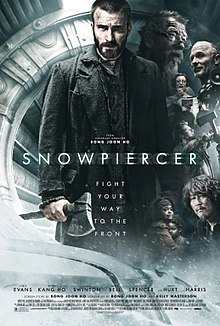
Snowpiercer is a 2013 English-language
South Korean-Czech science fiction thriller film based on the French graphic
novel Le Transperceneige by Jacques Lob, Benjamin Legrand and Jean-Marc
Rochette. The film is directed by Bong Joon-ho, and written by Bong and Kelly
Masterson. The film marks Bong's English-language debut; approximately 80% of
the film was shot in English.
The film stars Chris Evans, Song Kang-ho,
Tilda Swinton, Jamie Bell, Octavia Spencer, Go Ah-sung, John Hurt, and Ed
Harris. The movie takes place aboard the globe-spanning Snowpiercer train which
holds the last remnants of humanity after an attempt at climate engineering in
order to stop global warming has unintentionally created a new ice age. Evans
stars as Curtis Everett, a member of the lower-class tail section passengers as
they lead a revolution against the elite of the front of the train. Filming was
done on train car sets mounted on gimbals at Barrandov Studios in Prague to
simulate the motion of the train.
Snowpiercer was well received by critics,
and appeared on many film critics' top ten film lists of 2014 following its
international release. Praise was primarily directed towards its vision,
direction, and performances, particularly Evans's and Swinton's. Initially
planned for a limited-screen showing in the United States, the critical
response to the film prompted The Weinstein Company to expand the showing to
more theaters and through digital streaming services. Produced at a budget of
$40 million, it remains as the most expensive Korean production ever.
Plot
In 2014, an attempt to counteract global
warming through climate engineering backfires catastrophically, unintentionally
causing an ice age that extinguishes all life except the inhabitants of the
Snowpiercer, a massive train powered by a perpetual motion engine that travels
a circumnavigational track, created by the transportation magnate Wilford. By
2031, elites inhabit the extravagant front cars and the "scum"
inhabit the tail in squalid and brutal conditions. Under watch by Wilford's
guards, they are brought only gelatinous protein bars to eat and kept in their
place in the social order by Minister Mason, while sometimes small children are
taken away.
Conspiring with his mentor Gilliam, Curtis
Everett leads the tail passengers in a revolt that he plans will take them all
the way up to the engine. Overpowering the guards, they release security expert
Namgoong Minsu and his clairvoyant daughter Yona from the prison car so as to
disable the locks between cars. They take the car where insects are ground up
to make their protein bars, and Gilliam suggests that if they take the
subsequent water supply car, they will control any negotiation with Wilford.
Instead, they are ambushed by a mass of masked men with hatchets led by Franco
the Elder under Mason's orders; after a bloody battle Curtis sacrifices his
second-in-command Edgar to win the fight. Mason is taken captive and Curtis,
Namgoong, Yona, and three other rebels: Gilliam's bodyguard Grey, and Andrew
and Tanya who have had their respective children Andy and Timmy taken away
continue on with her as a hostage.
They travel through several luxurious cars
and arrive at a classroom, where the teacher expounds to the children and the
rebels on the greatness of Wilford and the "sacred engine". While
distracted by the celebration of the New Year marking one circumnavigation of
the globe, the teacher ambushes them, killing Andrew before Grey kills her.
Further back, Franco and Mason's soldiers use the same distraction to kill the
rebel army and many of the tail passengers. Franco executes Gilliam, and Curtis
kills Mason in revenge. Curtis' group continues forward, followed by Franco,
leading to a violent fight in a sauna car during which Franco kills Grey and
Tanya before Curtis and Namgoong seemingly kill him.
At the gate to the engine, Namgoong reveals
that he plans to use Kronole, a hallucinogen he has gathered from the elites
they passed, as an explosive to blow a hatch to the outside, as he observed
signs the world outside is thawing. Curtis confesses to him that shortly after
boarding the train, the tail passengers resorted to cannibalism to survive, and
he is haunted by his part in it. He was nearly ready to kill infant Edgar when
Gilliam offered his own arm instead. After years of disdain for Wilford, Curtis
seeks to learn what Wilford's intentions were. Franco is revealed to have
survived and makes his way toward the engine.
Wilford's assistant Claude emerges from the
engine, shoots Namgoong, and invites Curtis inside where he meets an aging
Wilford. Wilford reveals to Curtis that his revolution was actually
orchestrated by himself and Gilliam to reduce the population and maintain the
balance of the sealed ecosystem, and subsequently orders the elimination of 74%
of the remaining tail passengers. He explains the importance of using fear and
chaos to maintain a necessary order and leadership on the train. After letting
Curtis experience being alone for the first time in seventeen years, Wilford
asks Curtis to replace him. Curtis appears ready to accept, when Yona runs in
and pulls up a floorboard, showing Curtis that small children from the tail
section are being trapped as replacement parts for "extinct"
machinery; the tail section only serves to provide this resource to the engine.
Curtis subdues Wilford and sacrifices an arm to save Timmy from this work.
Namgoong revives and finally kills Franco
as Yona lights the fuse on the Kronole. Curtis and Namgoong tightly embrace
Yona and Timmy, protecting them from the blast. The explosion triggers an
avalanche that derails the train. Yona and Timmy, apparently the only
survivors, emerge from the wreckage and see a polar bear, proof that life
exists outside the train.
Big Brother is a television reality game
show based on an originally Dutch TV series of the same name created by producer
John de Mol in 1997. The series follows a group of contestants, known as
HouseGuests, who are living together in a custom-built home under constant
surveillance. The HouseGuests are completely isolated from the outside world,
and can have no communication with those not in the house. The contestants are
competing for a $500,000 grand prize, with weekly competitions and evictions
determining who will win the show. The series takes its name from the character
in George Orwell's novel Nineteen Eighty-Four (1984). The series launched on
July 5, 2000 to a successful start, though ratings and critical reaction
continued to grow increasingly negative. This led to the second season being a
revamp of the show, featuring a more competition-based challenge. The series
has since continued to be a hit for CBS, and is the second longest-running
adaptation of the series to date, after the Spanish adaptation.
The program is the first reality game show
to air exclusively on a streaming platform with a season airing in the fall of
2016 on CBS's streaming service, CBS All Access. CBS also renewed the series
for a 19th and 20th season. The 19th season is scheduled to premiere on June
28, 2017, while the 20th season is expected to air in the summer of 2018.
8.Animal Farm
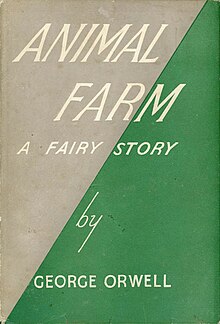
Animal Farm is an allegorical novella by
George Orwell, first published in England on 17 August 1945. According to
Orwell, the book reflects events leading up to the Russian Revolution of 1917
and then on into the Stalinist era of the Soviet Union. Orwell, a democratic
socialist, was a critic of Joseph Stalin and hostile to Moscow-directed
Stalinism, an attitude that was critically shaped by his experiences during the
Spanish Civil War. The Soviet Union, he believed, had become a brutal
dictatorship, built upon a cult of personality and enforced by a reign of
terror. In a letter to Yvonne Davet, Orwell described Animal Farm as a
satirical tale against Stalin ("un conte satirique contre Staline"),
and in his essay "Why I Write" (1946), wrote that Animal Farm was the
first book in which he tried, with full consciousness of what he was doing,
"to fuse political purpose and artistic purpose into one whole".
The original title was Animal Farm: A Fairy
Story; U.S. publishers dropped the subtitle when it was published in 1946, and
only one of the translations during Orwell's lifetime kept it. Other titular
variations include subtitles like "A Satire" and "A Contemporary
Satire".[4] Orwell suggested the title Union des républiques socialistes
animales for the French translation, which abbreviates to URSA, the Latin word
for "bear", a symbol of Russia. It also played on the French name of
the Soviet Union, Union des républiques socialistes soviétiques.
Orwell wrote the book between November 1943
and February 1944, when the UK was in its wartime alliance with the Soviet
Union and the British people and intelligentsia held Stalin in high esteem, a
phenomenon Orwell hated. The manuscript was initially rejected by a number of
British and American publishers, including one of Orwell's own, Victor
Gollancz, which delayed its publication. It became a great commercial success
when it did appear partly because international relations were transformed as
the wartime alliance gave way to the Cold War.
Time magazine chose the book as one of the
100 best English-language novels (1923 to 2005); it also featured at number 31
on the Modern Library List of Best 20th-Century Novels. It won a Retrospective
Hugo Award in 1996, and is included in the Great Books of the Western World
selection.
As a literary device, an allegory is a
metaphor whose vehicle may be a character, place or event, representing
real-world issues and occurrences. Allegory has been used widely throughout
history in all forms of art, largely because it can readily illustrate complex
ideas and concepts in ways that are comprehensible or striking to its viewers,
readers, or listeners.
Writers or speakers typically use
allegories as literary devices or as rhetorical devices that convey hidden
meanings through symbolic figures, actions, imagery, or events, which together
create the moral, spiritual, or political meaning the author wishes to convey.
Etymology
First attested in English in 1382, the word
allegory comes from Latin allegoria, the latinisation of the Greek ἀλληγορία (allegoría), "veiled language, figurative," which in turn comes
from both ἄλλος (allos), "another, different" and ἀγορεύω (agoreuo), "to
harangue, to speak in the assembly"which originate from ἀγορά (agora),
"assembly".
(n.)
1. a plant or animal that has the same
genes as the original from which it was produced
2. informal disapproving someone or
something that looks very much like someone or something else:
ex: Most people saw her as just another
blond-haired, red-lipped Marilyn Monroe clone.
(v.)
1. to create a clone of a plant or animal:
ex: Scientists have already cloned a sheep.
ex: Experiments to try to clone human
embryos have met with hostility from some sections of the public.
Week15
青少年文學 Week 15
1.The Ones Who Walk Away from Omelas

2.The Handmaid's Tale

3.Coming of age
4.Tales from Earthsea

5.Lord of the Flies

6.William Golding

7.Golden Fleece
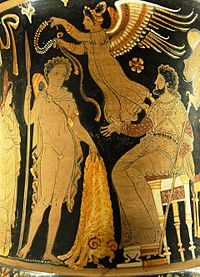
1.The Ones Who Walk Away from Omelas
"The Ones Who Walk Away from
Omelas" is a 1973 plotless, short, descriptive work of philosophical
fiction, though popularly classified as a short story, by American writer
Ursula K. Le Guin. With deliberately both vague and vivid descriptions, the
narrator depicts a summer festival in the utopian city of Omelas, whose
prosperity depends on the perpetual misery of a single child.
"The Ones Who Walk Away from
Omelas" was nominated for the Locus Award for Best Short Fiction in 1974
and won the Hugo Award for Best Short Story in 1974.
Publication
Le Guin's piece was originally published in
New Dimensions 3, a hard-cover science fiction anthology edited by Robert
Silverberg, in October 1973. It was reprinted in Le Guin's The Wind's Twelve
Quarters in 1975, and has been frequently anthologized elsewhere.
It has also appeared as an independently
published, 31-page hardcover book for young adults in 1993.
It was republished in the second volume of
the short-story anthology The Unreal and the Real in 2014.
Synopsis
The only chronological element of the work
is that it begins by describing the first day of summer in Omelas, a shimmering
city of unbelievable happiness and delight. In Omelas, the summer solstice is
celebrated with a glorious festival and a race featuring children on horseback.
The vibrant festival atmosphere, however, seems to be an everyday
characteristic of the blissful community, whose citizens, though limited in
their advanced technology to communal (rather than private) resources, are
still intelligent, sophisticated, and cultured. Omelas has no kings, soldiers,
priests, or slaves. The specific socio-politico-economic setup of the community
is not mentioned, but the narrator merely explains that the reader cannot be
sure of every particular.
Self-admittedly, the uncertain narrator
reflects that "Omelas sounds in my words like a city in a fairy tale, long
ago and far away, once upon a time. Perhaps it would be best if you imagined it
as your own fancy bids, assuming it will rise to the occasion, for certainly I
cannot suit you all."[7] The narrator even suggests that, if necessary,
the reader may include an orgy in their mental picture of Omelas.
Everything about Omelas is so abundantly
pleasing that the narrator decides the reader is not yet truly convinced of its
existence and so elaborates upon one final element of the city: its one
atrocity. The city's constant state of serenity and splendor requires that a
single unfortunate child be kept in perpetual filth, darkness, and misery.
Once citizens are old enough to know the
truth, most, though initially shocked and disgusted, ultimately acquiesce with
that one injustice which secures the happiness of the rest of the city.
However, a few citizens, young and old, silently walk away from the city, and
no one knows where they go. The writing ends with "The place they go
towards is a place even less imaginable to most of us than the city of
happiness. I cannot describe it at all. It is possible it does not exist. But
they seem to know where they are going, the ones who walk away from
Omelas."
2.The Handmaid's Tale
The Handmaid's Tale is an American
television series created by Bruce Miller based on the 1985 novel of the same
name by Canadian writer Margaret Atwood. It was ordered by streaming service
Hulu with a straight-to-series order of 10 episodes, with the production
beginning in late 2016.
The first three episodes of the series
premiered on April 26, 2017, with the subsequent seven episodes added on a
weekly basis every Wednesday. In May 2017, The Handmaid's Tale was renewed for
a second season to premiere in 2018.
Plot
In a dystopian near-future, the
totalitarian and Christian fundamentalist government of Gilead rules the former
United States amidst an ongoing civil war. Society is organized along a new,
militarized, hierarchical regime of Bible-inspired social and religious
fanaticism and newly-created social classes, in which women are brutally
subjugated, and by law are not allowed to work, own property, control money, or
read. Widespread infertility due to warfare-induced environmental contamination
has resulted in the conscription of the few remaining fertile women — called
Handmaids, according to Biblical precedent — who are assigned to the homes of
the ruling elite, where they must submit to ritualized sex with their male
masters in order to become pregnant and bear children for those men and their
wives.
The main character, Offred (Elisabeth
Moss), is the Handmaid assigned to the home of Gileadan Commander Fred
Waterford (Joseph Fiennes) and his religious wife Serena Joy (Yvonne
Strahovski), and as such is subject to the strictest rules and constant
scrutiny; an improper word or deed on her part can lead to her execution.
Offred, who is named after her male master like all Handmaids, can remember the
"time before", when she was married with a daughter and had her own
name and identity, but all she can safely do now is follow the rules of Gilead
in the hope that she can someday live free and reunite with her daughter.
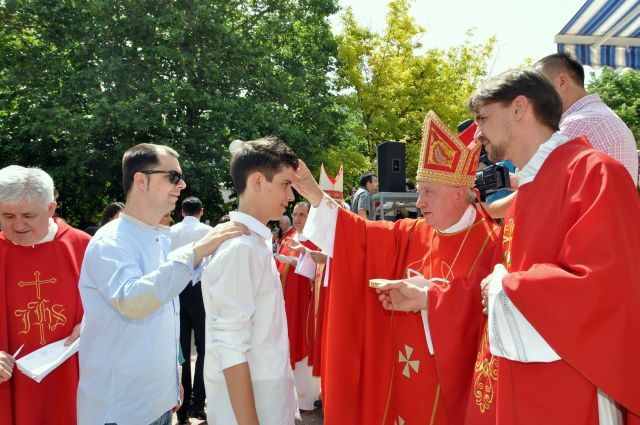
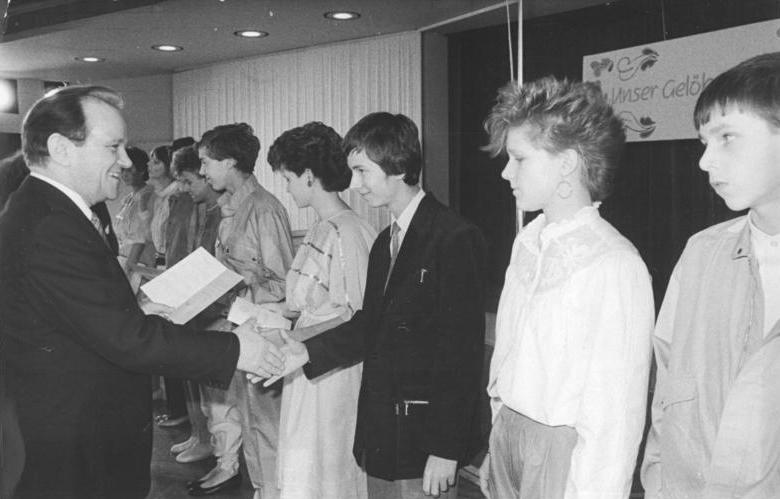
Coming of age is a young person's
transition from being a child to being an adult. The certain age at which this
transition takes place changes in society, as does the nature of the
change.[not in citation given][1] It can be a simple legal convention or can be
part of a ritual or spiritual event, as practiced by many societies. In the
past, and in some societies today, such a change is associated with the age of
sexual maturity (early adolescence), especially menarche and spermarche. In
others, it is associated with an age of religious responsibility. Particularly
in western societies, modern legal conventions which stipulate points in late
adolescence or early adulthood (most commonly 18-21 when adolescents are
generally no longer considered minors and are granted the full rights and
responsibilities of an adult) are the focus of the transition. In either case,
many cultures retain ceremonies to confirm the coming of age, and significant
benefits come with the change.
Coming of age is often a topic of fiction,
in the form of a coming-of-age story. In written literature, a novel which
deals with the psychological and moral growth often associated with coming of
age is sometimes called a bildungsroman. Similar stories that are told in film
are called coming-of-age films.
Tales from Earthsea (Japanese: ゲド戦記? Hepburn: Gedo Senki, literally Ged's War Chronicles) is a 2006
Japanese animated fantasy film directed by Gorō Miyazaki and produced by Studio
Ghibli. The film is based on a combination of plots and characters from the
first four books of Ursula K. Le Guin's Earthsea series: A Wizard of Earthsea,
The Tombs of Atuan, The Farthest Shore, and Tehanu; however, the film's title
is named from the collection of short stories, Tales from Earthsea, made in
2001. The plot was "entirely different" according to the author
Ursula K. Le Guin, who told director Gorō Miyazaki, "It is not my book. It
is your movie. It is a good movie", although she later expressed her
disappointment with the end result.[2] The film is also inspired by the manga
The Journey of Shuna by Hayao Miyazaki. A manga adaptation of the film has been
published in Japan.
Plot
The crew of a war galley are up against a
storm. Suddenly two dragons are fighting above the clouds, during which one is
killed by the other (an occurrence believed impossible).
News of the kingdom declining and nothing
heard from Prince Arren troubles the King of Elad. The Wizard Root speaks of
dragons and men being "one", divided by their particular desires
(freedom and possessions respectively), which is the cause of the world's
"Balance" weakening. Suddenly the King is fatally stabbed in a dark
corridor by a young boy who is revealed to be his own son Arren. The young
prince steals his father's sword and flees the palace while his father dies
from the wound inflicted on him.
In the desert, Arren is rescued from dire
wolves by the Archmage Sparrowhawk. Together they travel to the city of Hort
Town, full of swindlers, slavers and Hazia drug merchants. When Arren explores
the town alone, he rescues a young girl named Therru from slavers, but is
captured by the slave master Hare and his sword is discarded in the sea.
Sparrowhawk rescues Arren from the slave caravan and takes him to a farm run by
Sparrowhawk's friend Tenar, who lives with Therru.
Sparrowhawk's intervention against Hare's
slave caravan angers Lord Cob, a powerful wizard and the ruler of Hort Town,
who wants the archmage brought to the castle. Meanwhile, Sparrowhawk tells
Arren that he seeks a way to restore the upset Balance, then resumes his search
in Hort Town. While there he buys Arren's sword from a merchant's stall and
manages to evade capture from Hare, learning about Cob's castle from the slave
master.
Arren confesses to Therru that he killed
his father and that feels an unknown presence following him. Because of this,
Arren leaves the farm, but is met by the presence, which is a mirror image of
himself. Arren falls unconscious after stumbling into a swamp while fleeing
from the image. Cob takes him to the castle, where he manipulates him into
revealing his "true name", Lebannen, to control him. Meanwhile, Hare
captures Tenar as bait to lure Sparrowhawk into the castle leaving Therru tied
to a post as a messenger. She frees herself, and encounters Sparrowhawk, who gives
her Arren's sword and tells her to stay home and give it to Arren if he
returns. Sparrowhawk breaks into the castle to save Tenar and confronts Cob.
Sparrowhawk learns that Cob is causing the world's Balance to collapse by
opening the door between life and death to try and gain eternal life.
Sparrowhawk tries to warn Cob of the dangers of upsetting the Balance, and Cob
sends Arren out to kill him. Sparrowhawk frees Arren from Cob's control but is
captured by Hare, his power having been weakened within the stronghold of Cob's
castle.
Meanwhile, Therru sees the same copy of
Arren and follows him to the castle, where he reveals that he is the light
within Arren and tells Therru his true name. Therru enters the castle and
learns of Sparrowhawk and Tenar's sunrise execution. She finds Arren, guilty
and hopeless, and brings hope back to him, calling him by his true name and
confides in him her own true name, Tehanu. They rush to rescue Sparrowhawk and
Tenar. Arren confronts Cob, who tries to kill him with a "Summoning
Spell," but he fights back and finally unsheathes his sword, which was
sealed with magic. Arren cuts off Cob's staff-holding hand. Unable to use his
magic powers, Cob rapidly begins to age. He captures Therru and flees to the
highest tower on the castle, with Arren in pursuit. Cornering Cob, Arren tries
to explain what he learned about life and death from Therru and Sparrowhawk to
Cob, but Cob refuses to listen and uses the last of his magic to strangle
Therru to death. However, she does not die as she has eternal life, and instead
becomes a dragon. Therru kills Cob by burning him alive and rescues Arren from
the collapsing castle tower.
Sparrowhawk and Tenar leave the castle, and
meanwhile Therru and Arren land in a field where Therru changes back into a
human. Arren tells Therru he will leave for home to repent for his crime, but
will come back to see her some day. After Arren and Therru reunite with
Sparrowhawk and Tenar, the four of them pitch in to finish the farm chores and
spend time together. Arren and Sparrowhawk depart for Enlad, bidding Therru and
Tenar goodbye. Therru looks up to see dragons peacefully flying in the sky,
indicating that the world's Balance is returning to normal.
5.Lord of the Flies
Lord of the Flies is a 1954 novel by Nobel
Prize-winning English author William Golding. The book focuses on a group of
British boys stranded on an uninhabited island and their disastrous attempt to
govern themselves.
Background
Published in 1954, Lord of the Flies was
Golding's first novel. Although it was not a great success at the time—selling
fewer than three thousand copies in the United States during 1955 before going
out of print—it soon went on to become a best-seller. It has been adapted to
film twice in English, in 1963 by Peter Brook and 1990 by Harry Hook, and once
in Filipino (1976).
The book takes place in the midst of an
unspecified nuclear war. Some of the marooned characters are ordinary students,
while others arrive as a musical choir under an established leader. With the
exception of the choirboys, Sam, and Eric, they appear never to have encountered
each other before. The book portrays their descent into savagery; left to
themselves on a paradisiacal island, far from modern civilization, the
well-educated children regress to a primitive state.
Golding wrote his book as a counterpoint to
R.M. Ballantyne's youth novel The Coral Island, and included specific
references to it, such as the rescuing naval officer's description of the
children's pursuit of Ralph as "a jolly good show, like the Coral
Island".Golding's three central characters—Ralph, Piggy and Jack—have been
interpreted as caricatures of Ballantyne's Coral Island protagonists.
Themes
At an allegorical level, the central theme
is the conflicting human impulses toward civilization and social organization—living
by rules, peacefully and in harmony—and toward the will to power. Themes
include the tension between groupthink and individuality, between rational and
emotional reactions, and between morality and immorality. How these play out,
and how different people feel the influences of these form a major subtext of
Lord of the Flies.[citation needed] The name "Lord of the Flies" is a
literal translation of Beelzebub, from 2 Kings.
Sir William Gerald Golding CBE (19
September 1911 – 19 June 1993) was an English novelist, playwright, and poet.
Best known for his novel Lord of the Flies, he won a Nobel Prize in Literature,
and was also awarded the Booker Prize for fiction in 1980 for his novel Rites
of Passage, the first book in what became his sea trilogy, To the Ends of the
Earth.
Golding was knighted in 1988. He was a
fellow of the Royal Society of Literature. In 2008, The Times ranked Golding
third on their list of "The 50 greatest British writers since 1945"
Biography
Early life
Plaque at Bishop Wordsworth's School,
Salisbury
William Golding was born in his
grandmother's house, 47 Mount Wise, Newquay, Cornwall, and he spent many
childhood holidays there. He grew up in Marlborough, Wiltshire, where his
father (Alec Golding) was a science master at Marlborough Grammar School (1905
to retirement). Alec Golding was a teacher at the school the young Golding and
his elder brother Joseph attended.[6] His mother, Mildred (Curnoe), kept house
at 29, The Green, Marlborough, and was a campaigner for female suffrage. In
1930 Golding went to Brasenose College, Oxford, where he read Natural Sciences
for two years before transferring to English Literature.
Golding took his B.A. degree with Second
Class Honours in the summer of 1934, and later that year a book of his Poems
was published by Macmillan & Co, with the help of his Oxford friend, the
anthroposophist Adam Bittleston.
He was a schoolmaster teaching Philosophy
and English in 1939, then just English from 1945 to 1961 at Bishop Wordsworth's
School, Salisbury, Wiltshire.
Marriage and family
Golding married Ann Brookfield, an
analytical chemist, (p161) on 30 September 1939. They had two children, Judith
and David.
War service
During World War II, Golding joined the
Royal Navy in 1940. He fought (on board a destroyer) and was briefly involved
in the pursuit and sinking of the German battleship Bismarck. He also
participated in the invasion of Normandy on D-Day, commanding a landing ship
that fired salvoes of rockets onto the beaches, and was in action at Walcheren
in which 23 out of 24 assault crafts were sunk.
Death
In 1985, Golding and his wife moved to
Tullimaar House at Perranarworthal, near Truro, Cornwall. He died of heart
failure eight years later, on 19 June 1993. He was buried in the parish
churchyard of Bowerchalke, Wiltshire (near the Hampshire and Dorset county
boundaries). He left the draft of a novel, The Double Tongue, set in ancient
Delphi, which was published posthumously. His son David continues to live at
Tullimaar House.
In Greek mythology, the Golden Fleece
(Greek: χρυσόμαλλον δέρας chrysómallon déras)
is the fleece of the gold-haired[a] winged ram, which was held in Colchis.[1]
The fleece is a symbol of authority and kingship. It figures in the tale of the
hero Jason and his crew of Argonauts, who set out on a quest for the fleece by
order of King Pelias, in order to place Jason rightfully on the throne of
Iolcus in Thessaly. Through the help of Medea, they acquire the Golden Fleece.
The story is of great antiquity and was current in the time of Homer (eighth
century BC). It survives in various forms, among which the details vary.
Plot
Athamas the Minyan, a founder of Halos in
Thessaly but also king of the city of Orchomenus in Boeotia (a region of
southeastern Greece), took the goddess Nephele as his first wife. They had two
children, the boy Phrixus (whose name means "curly"—as in ram's
fleece) and the girl Helle. Later Athamas became enamored of and married Ino,
the daughter of Cadmus. When Nephele left in anger, drought came upon the land.
Ino was jealous of her stepchildren and
plotted their deaths: in some versions, she persuaded Athamas that sacrificing
Phrixus was the only way to end the drought. Nephele, or her spirit, appeared
to the children with a winged ram whose fleece was of gold.[b] The ram had been
sired by Poseidon in his primitive ram-form upon Theophane, a nymph[c] and the
granddaughter of Helios, the sun-god. According to Hyginus, Poseidon carried
Theophane to an island where he made her into a ewe, so that he could have his
way with her among the flocks. There Theophane's other suitors could not
distinguish the ram-god and his consort.
Nepheles' children escaped on the yellow
ram over the sea, but Helle fell off and drowned in the strait now named after
her, the Hellespont. The ram spoke to Phrixus, encouraging him,[d] and took the
boy safely to Colchis (modern-day Georgia), on the easternmost shore of the
Euxine (Black) Sea.
There Phrixus sacrificed the winged ram to
Poseidon, essentially returning him to the god.[e] The ram became the
constellation Aries.
Phrixus settled in the house of Aeetes, son
of Helios the sun god. He hung the Golden Fleece preserved from the sacrifice
of the ram on an oak in a grove sacred to Ares, the god of war and one of the
Twelve Olympians. The golden fleece was defended by bulls with hoofs of brass
and breath of fire. It was also guarded by a never sleeping dragon with teeth
which could become soldiers when planted in the ground. The dragon was at the
foot of the tree on which the fleece was placed.
訂閱:
意見 (Atom)